 Dutchess BOCES’ proposed 2026-2027 budget of $7.1 million was presented to the Board of Education during its annual meeting April 8, with a focus on innovation, partnership and growth.
The agency’s 13 component districts will vote April 28 on the budget and two vacant board seats as trustees Michael Riehl and Bryce Holland are stepping down from their roles. Mark Fleischhauer, of Rhinebeck, and Judy Moran, of Amenia, are the nominees.
The full budget, including all service requests, will be approved by the board June 10. Assistant Superintendent for Business and Operations Mike Skerritt noted that this is the first year that all of BOCES’ component districts requested administrators come to present the budget to their school boards.
“It’s a really wonderful testament to how they see us as a partner in the work they need us to do in their districts,” Skerritt said. “It’s an exciting time to be at Dutchess BOCES.”
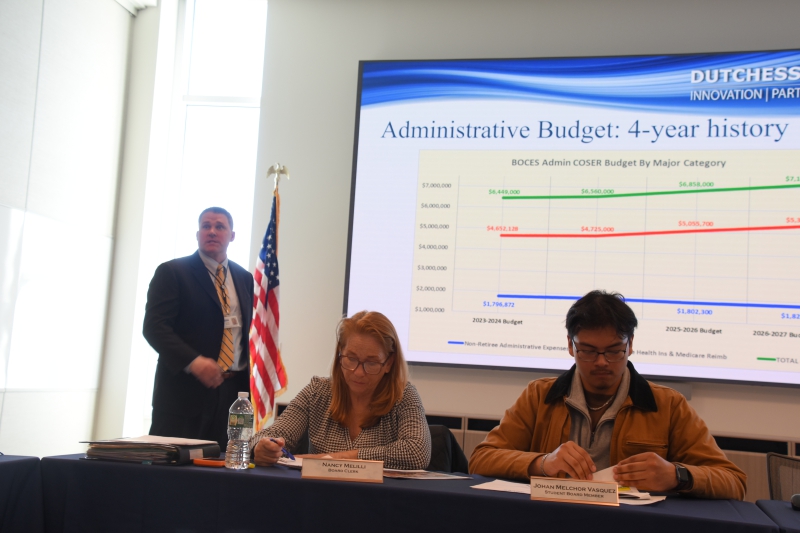
Key budget assumptions include a blended average health insurance rate increase of 9.9% for active and retired employees. Within the current rate structure is a lower Dutchess Educational Health Insurance Consortium (DEHIC) rate for those with Medicare as their primary source of insurance. Non-retiree expenses are seeing a 1.09% increase, while Skerritt noted that roughly three-quarters of the administrative budget consists of health insurance for retirees because costs shift to the agency if a retiree is eligible for health benefits.
 “Over a three-year time horizon, we’ve only increased the active employee and Board of Trustee portion of the budget 1.4% in total; that’s the kind of commitment that we’ve made to the schools to try to help offset the three quarters of that budget that’s health insurance,” Skerritt explained. “I think our districts have appreciated that.”
Revenue sources for the agency come from contributions from the districts, interest income and a payment from DEHIC for being a lead agent. The interest income is being decreased by $30,000 year over year, with the component district charge being increased by 4.94%. Over the last five years, the agency has asked the districts for a $1 million annual contribution to make minor, but vital improvements, such as fixing HVAC systems and leaky roofs, and is doing the same this year.
“It allows us to do those unforeseen capital items that we may need to keep the campus and facility in good working order,” Skerritt said.
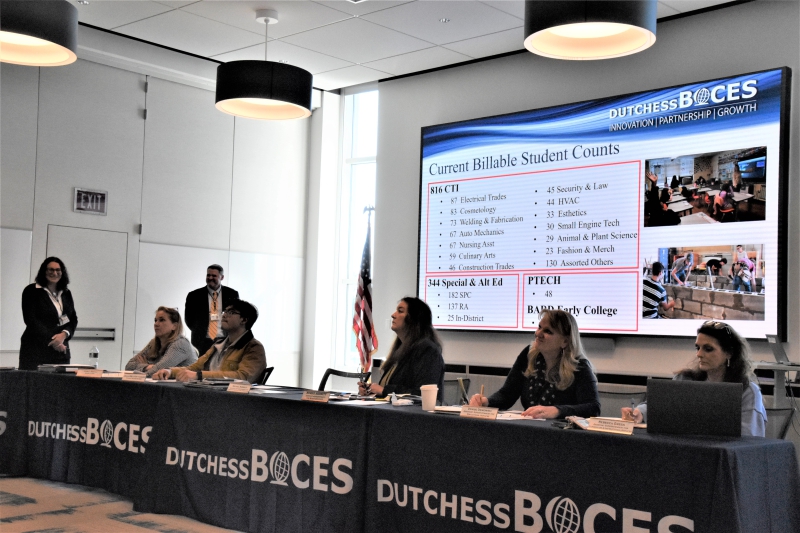
The agency has made strategic investments in cutting-edge equipment for the Career & Technical Institute, focused on meeting evolving special education needs, has seen growth in early college and dual enrollment programs and will roll out safety and security services to component districts next school year. Skerritt noted that it is vital for BOCES to have discretionary spending controls consistent with its component districts’ budget pressures.
“Every month, I bring budget modification reports to you where our numbers are typically increasing, but there are pockets where we have static budgets,” Skerritt said. “We need to have the same sort of cost controls in place that school districts do.”
District Superintendent Dr. Jodi DeLucia highlighted the agency’s Blueprint for Excellence, saying BOCES has seen significant progress in being the first place districts contact for services, making it the central hub for services in the county.
"On any given day, I speak to a variety of stakeholders about how we might be able to partner to help the community and students. A recent example of this is the Utility Bill Clinic we are hosting April 16 after speaking with Assemblywoman Didi Barrett and the Public Utility Law Project, which will help families identify options to deal with rising utility, food and housing costs," DeLucia said. “We’ve also become a hub for some of the roll-outs and pilots for work from NYSED (New York State Education Department) — we want to be their first call as well.”
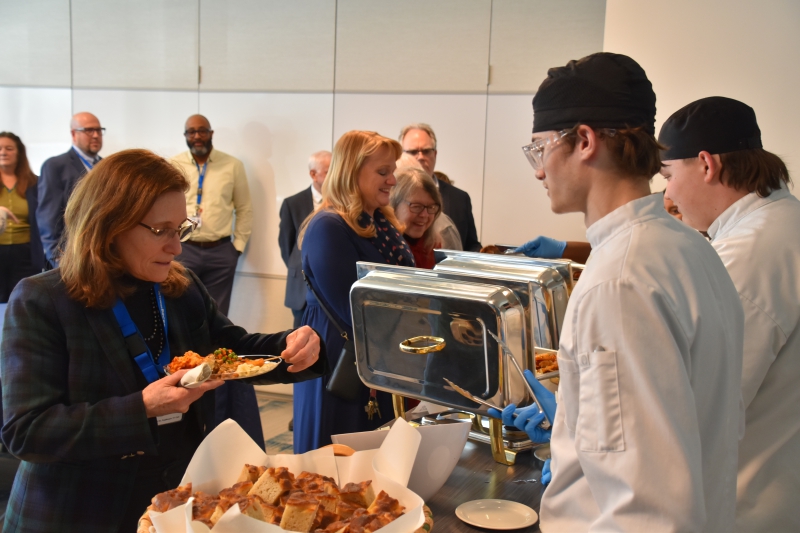
After the meeting, board members and administrators were hosted by students in the Career & Technical Institute’s Culinary Arts and Restaurant Management program, who received many kudos for their efforts. The regular board meeting followed.