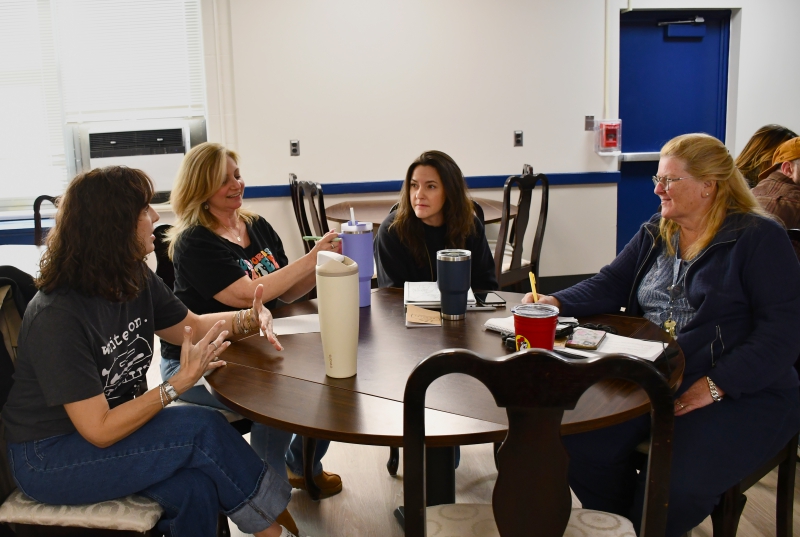
 At Dutchess BOCES’ Superintendent’s Conference Day March 10, faculty and staff attended meaningful sessions in support of their professional growth.
The Professional Development Committee designed sessions aligned with the agency’s Blueprint for Excellence and the Professional Development Plan, addressing where BOCES wants to be in five to 10 years in numerous areas, giving teachers and staff plenty of opportunity to grow. The committee listened to the needs of the agency.
“While it may not always be possible for staff to choose their own sessions every conference day, we wanted to assure the agency stakeholders that their feedback is heard and is important. Our goal was to provide choice and voice and we were able to meet that goal in most cases,” Assistant Superintendent for Curriculum and Instructional Services Rebecca Green said.
In total, there were 45 sessions, many repeated several times to ensure access for all.
Two are highlighted below.
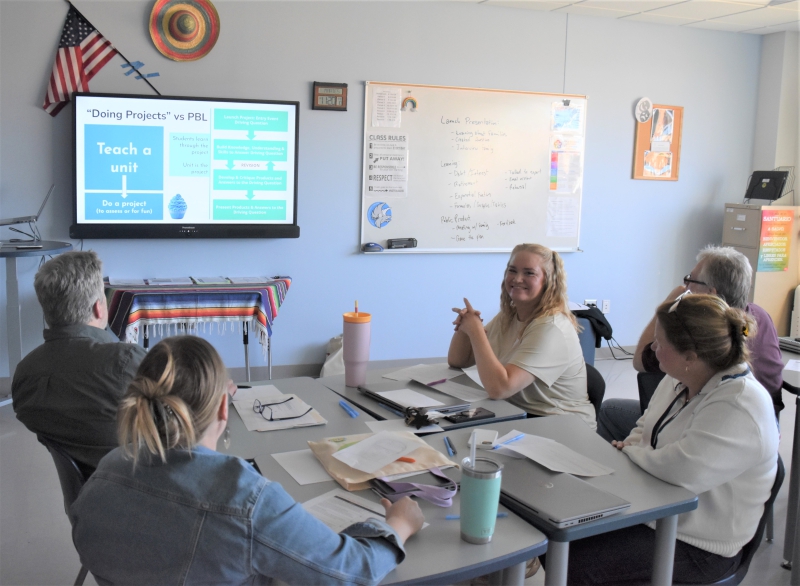
Project-Based Learning Workshop
Educational Resources Professional Development Specialist Daniel August noted that the launch of a project-based learning activity draws students in by informing them what the final product will be. He used a video about students helping families come up with budgeting solutions as an example.
Project-based learning is a student-centered and hands-on approach to teaching and learning. Students are given a real-world question, problem, or challenge to solve, and spend time researching, deepening understanding, planning, experimenting, collaborating, and communicating to resolve it. Engaging in these types of authentic learning experiences boost students' motivation, personal agency, and build upon both their academic knowledge and skills while also developing the social and problem-solving skills needed to be successful outside of the classroom.
“From the jump, these students know, ‘There is a family and I’m going to have to present to them a solution for their finances … I have to help them budget, so they can meet their goals,’” August said. “It’s going to make all of this learning meaningful and justify why we’re doing it.”
For Career & Technical Institute (CTI) teachers, August noted bringing in industry professionals helps students keep their projects on track, as they have current industry knowledge. August also explained that meeting goals and deadlines and accepting feedback are crucial, citing how Fashion Design & Merchandising students need to do more than just have one garment finished before the annual fashion show.
 “You have to have your sketches, you have to make multiple garments, you have to work with the model that you’re going to have … there’s a little video where they introduced their design,” August said. “There’s also lots of reflection, you’re revising here after your benchmark, you’re getting feedback and you’re going to change your plans.”
CTI Integrated Math Teacher Rebecca Canning said having solidified a framework to implement project-based learning activities will be beneficial for the eight trade programs she teaches in.
“I found it extremely helpful in, not just looking at a project as an assessment, but using at as a way to drive the learning itself,” Canning said.
The Impact of AI on the Trades
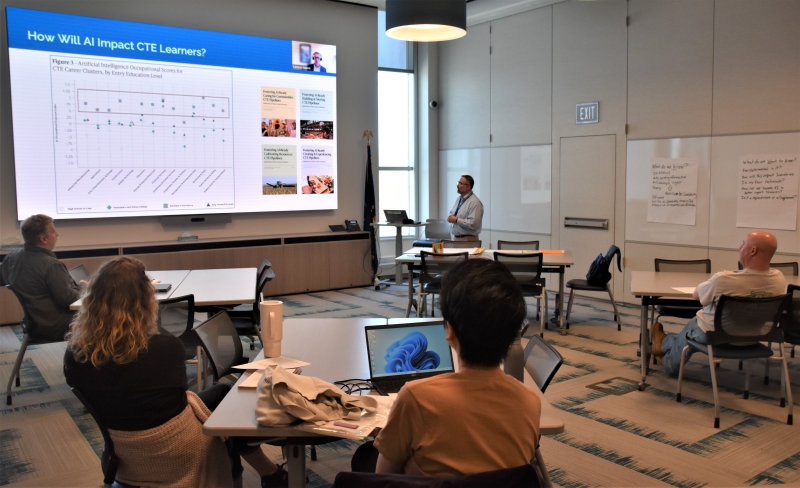
Director of Career and Technical Education and Adult Education Nick Millas started off by asking attendees what they know about artificial intelligence (AI) and what they wanted to learn about it. There is a fear of AI among industry professionals, with Millas himself initially being skeptical until he started exploring ChatGPT, adding that students who utilize it will be successful.
“Regardless of what industry you’re in, you need to have an understanding of what artificial intelligence is,” Millas said. “It’s already embedded in modern job sites and employers expect tech-literate tradespeople.”
 Some industries utilizing AI include construction, where it assists with blueprint analysis, and culinary where it can multiply recipes. Millas noted while jobs will be eliminated or changed because of AI, certain tasks, like safety protocols and fact checking, still require a human touch.
“Accountability for errors is going to fall on humans, who ultimately make a decision,” Millas said. “Do not stop teaching those foundational skills because that is the check on AI, because remember, AI is not always right.”
While the beauty industry is largely human-run, Esthetics Teacher Melissa Lennon sees some helpful uses of AI, particularly when it comes to dispensing products.
“I think that would be a good way to be cost-effective with our products and dispensing the right quantity,” Lennon said.