
 Dancing aliens, lizards, sloths and moose appeared at Salt Point Center last week, springing from the minds of students as they learned coding basics as part of Computer Science Education Week.
The lessons were differentiated based on ability. This allowed students' creativity to flow Tuesday and Wednesday as they either worked independently or in groups on lessons from Code.org.
The platform allows students at every level (even adults) to learn how to code and see their projects on the screen.
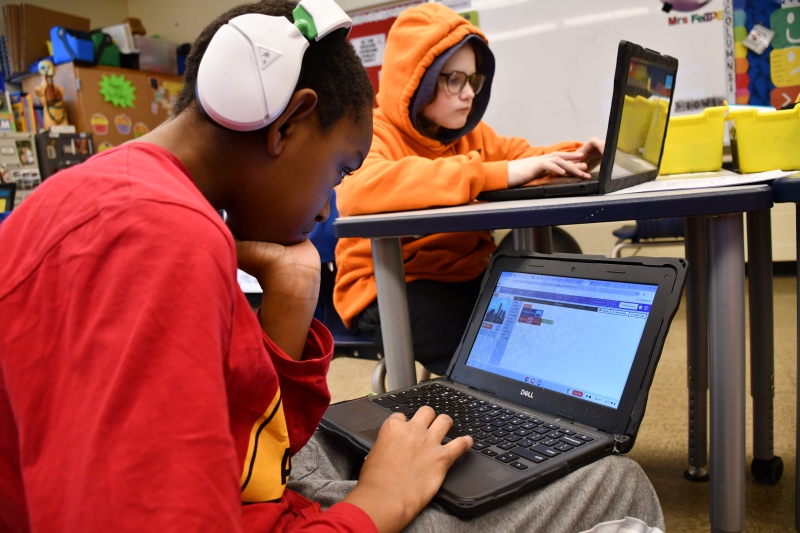
In Kelly Felipe’s class, students were working individually on their laptops to create scenes, each choosing their own backgrounds, characters, colors, sounds and actions.
“It’s more advanced than what I’m normally used to,” said Parker Fors, who was creating a snowball fight. “I had to get the background of snow and then add a wooden cabin and find the characters I want, which is what I’m doing now.”
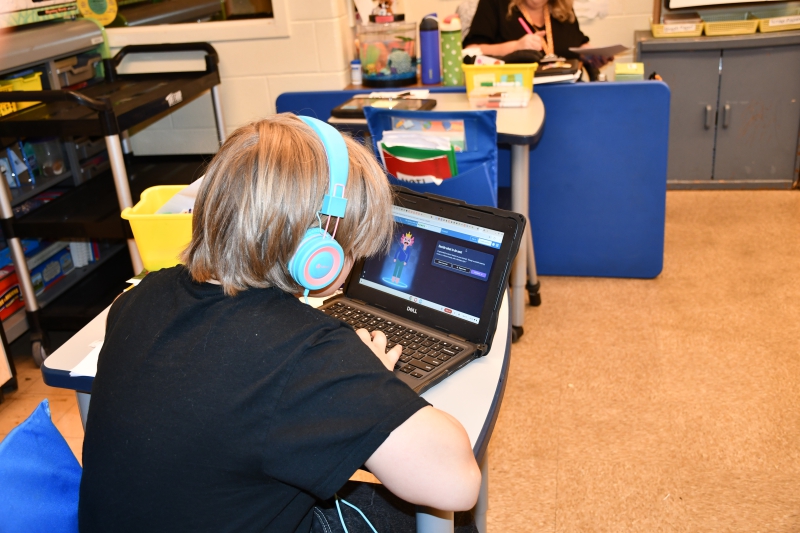 Classmate Lyle Beebe picked out a character from the palette and was selecting clothing. “It’s kind of cool, I like using my imagination,” he said.
Dylan Clarke designed a scene with a transition that came as angry clouds descended over his alien character. Once the clouds passed, the alien was supposed to change to one with a sad face and three eyes, but that didn’t happen. So, he leapt into troubleshooting mode. He replaced several code elements, including changing the character and switching the clouds to money, which unexpectedly exploded on screen. “My favorite part is learning why things happened - like when the money just exploded,” he said.
Principal Melissa Murphy said the coding activities align directly with SPC’s strategic plan and the New York State Portrait of a Graduate, which emphasizes skills such as critical thinking, creativity, communication, collaboration and adaptability.
“Through hands-on, differentiated coding experiences, students engaged in problem-solving, logical reasoning, and perseverance while applying technology in meaningful ways. Exposure to computer science and artificial intelligence supports career readiness by building digital literacy and transferable skills essential for postsecondary education, employment, and independent living. These experiences also reflect SPC’s commitment to inclusive, student-centered instruction that prepares learners for success across a wide range of future pathways,” she said.
Down the hall, Melanie McAvoy worked with her third and fourth graders to design a dance scene using Mix and Move with AI. McAvoy stood at the Promethean board and asked students to provide input on what the main character and background dancers should look like, selecting options from dropdown menus on the platform.
Before playing a short introduction, she asked the class if they knew what AI stood for. “Artificial intelligence,” Evan Catalioto answered, earning a “That’s right,” from McAvoy.
The introduction stressed to students that AI “doesn’t replace creativity” and showed how AI goes through training and uses math to predict one detail after another to generate the scenes.
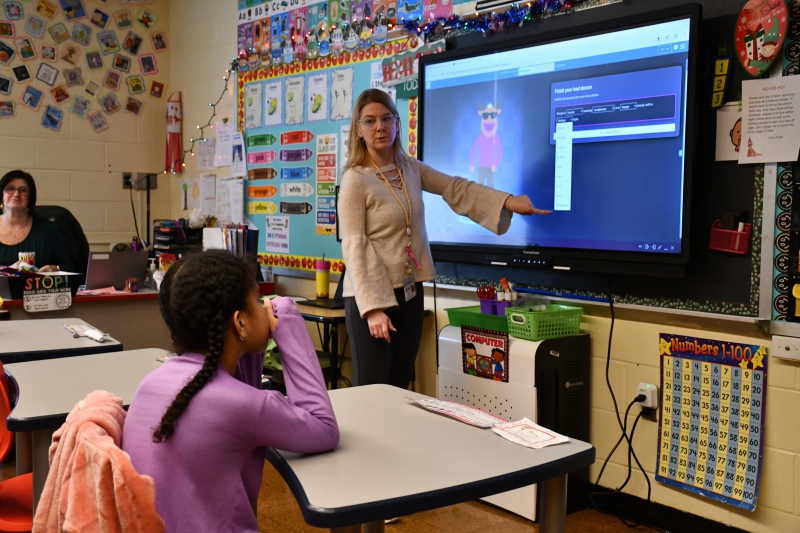 Aria Williams picked a K-pop look for the character, and Catalioto chose a zombie dance move, which McAvoy added. Shai Cutchin chose an acoustic drum beat. As McAvoy added each new element, she ran the program, showing students the results, and then was prompted to make some changes - going through a total of 14 steps to finish the project.
“The end was amazing - I was moving around,” Catalioto said, adding that his favorite contribution was picking the way the character moved.
Earlier in the week, students were introduced to the “Hour of Code” project. On Thursday, the students showed their projects and shared one bug they solved during coding. On Friday, they received certificates and stickers for completing the Hour of Code.